An Unreasonable Risk: A new GTA reactor
Ontario Power Generation (OPG) has applied to the Canadian Nuclear Safety Commission for a Site

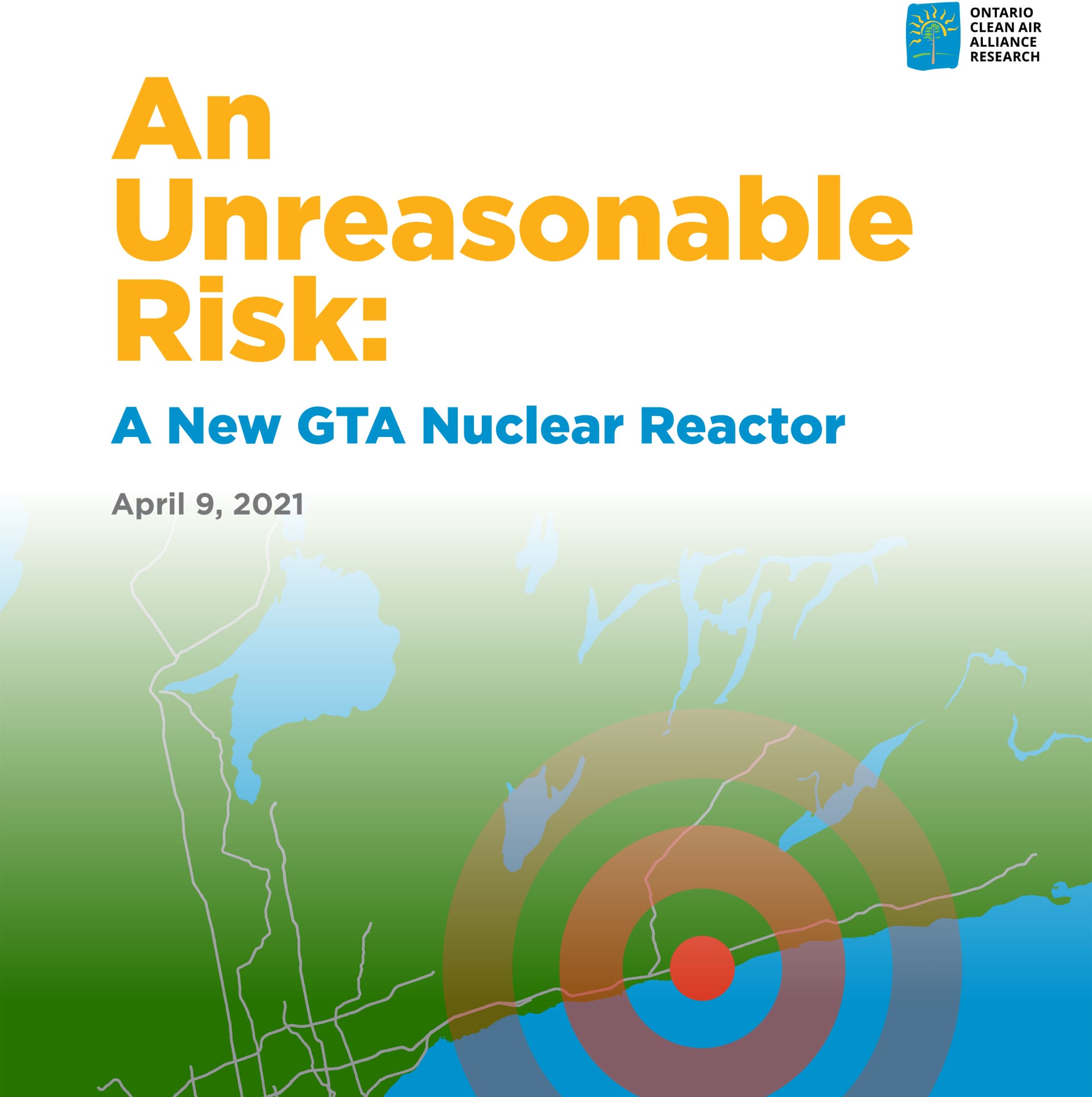
Ontario Power Generation (OPG) has applied to the Canadian Nuclear Safety Commission for a Site
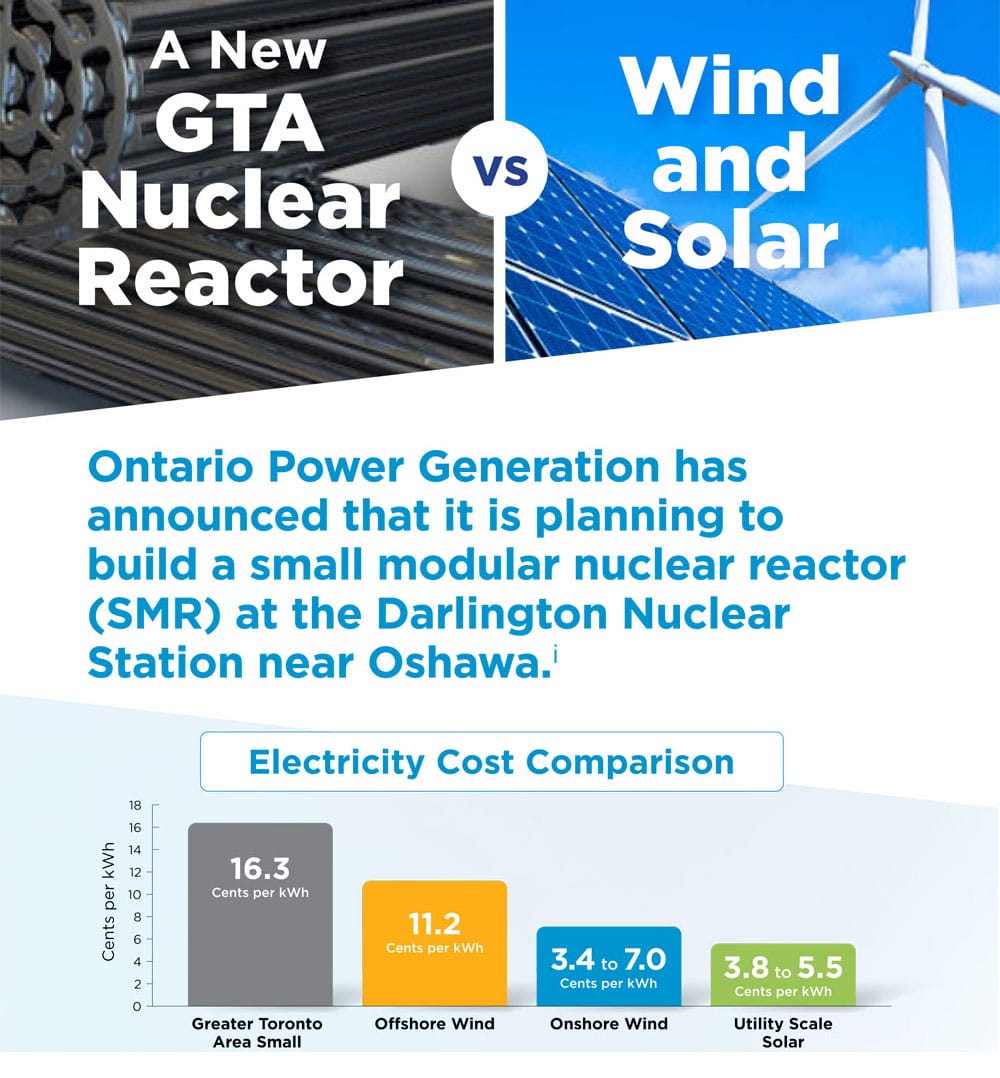
Solar and wind energy are a much better way to meet our energy needs than building a new nuclear reactor in the Greater Toronto Area.
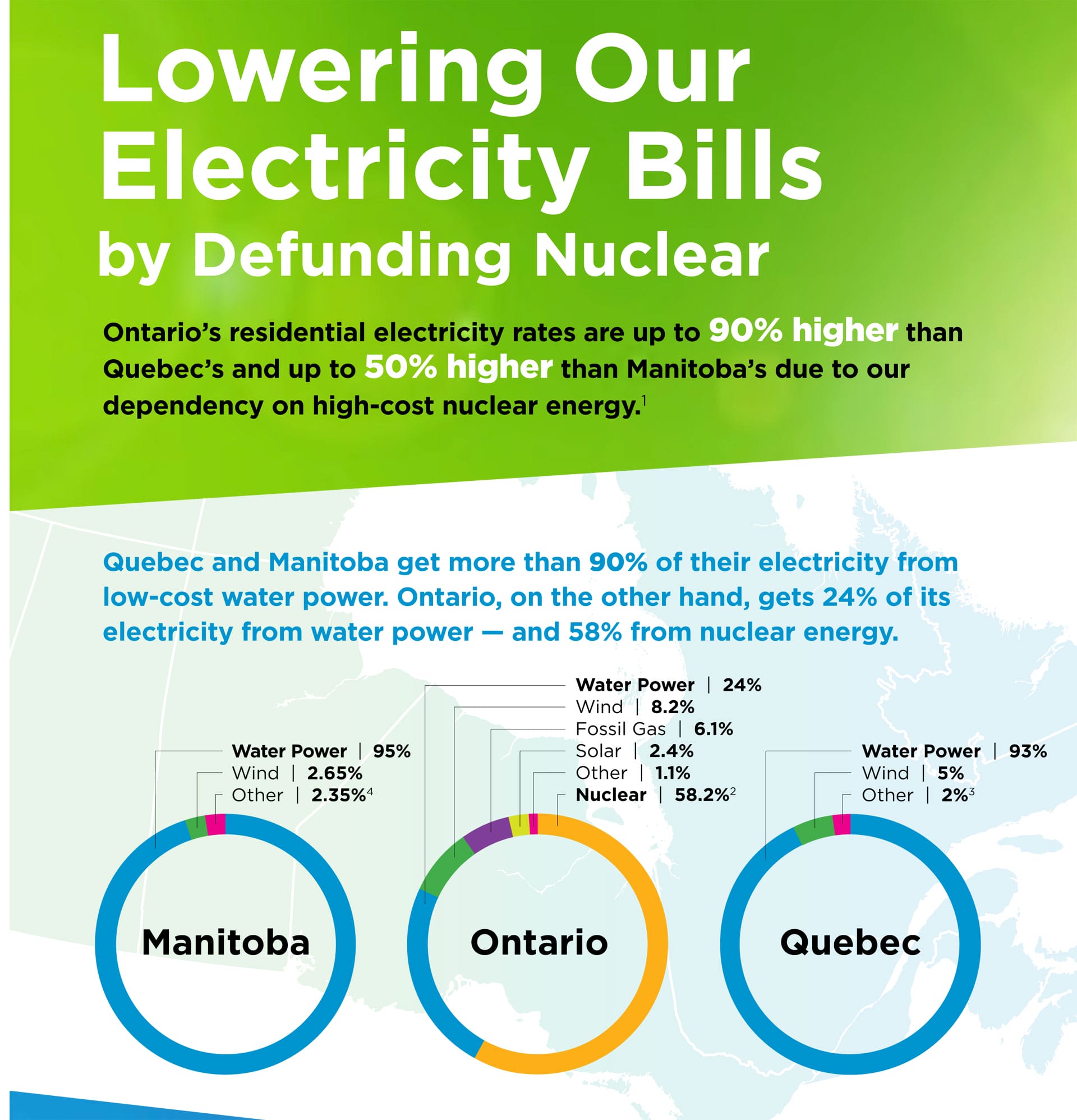
Ontario's electricity prices are 50% to 90% higher than Manitoba's and Quebec's. The reason is simple. While Quebec and Manitoba have built their electricity systems around low-cost water power, Ontario has bet big -- and lost -- on high cost nuclear.

Ending the use of coal-fired electricity was a massive climate achievement -- the equivalent of taking seven million cars off the road. This report looks at how this remarkable success was achieved and the lessons learned from one of the biggest environmental success stories in recent times.
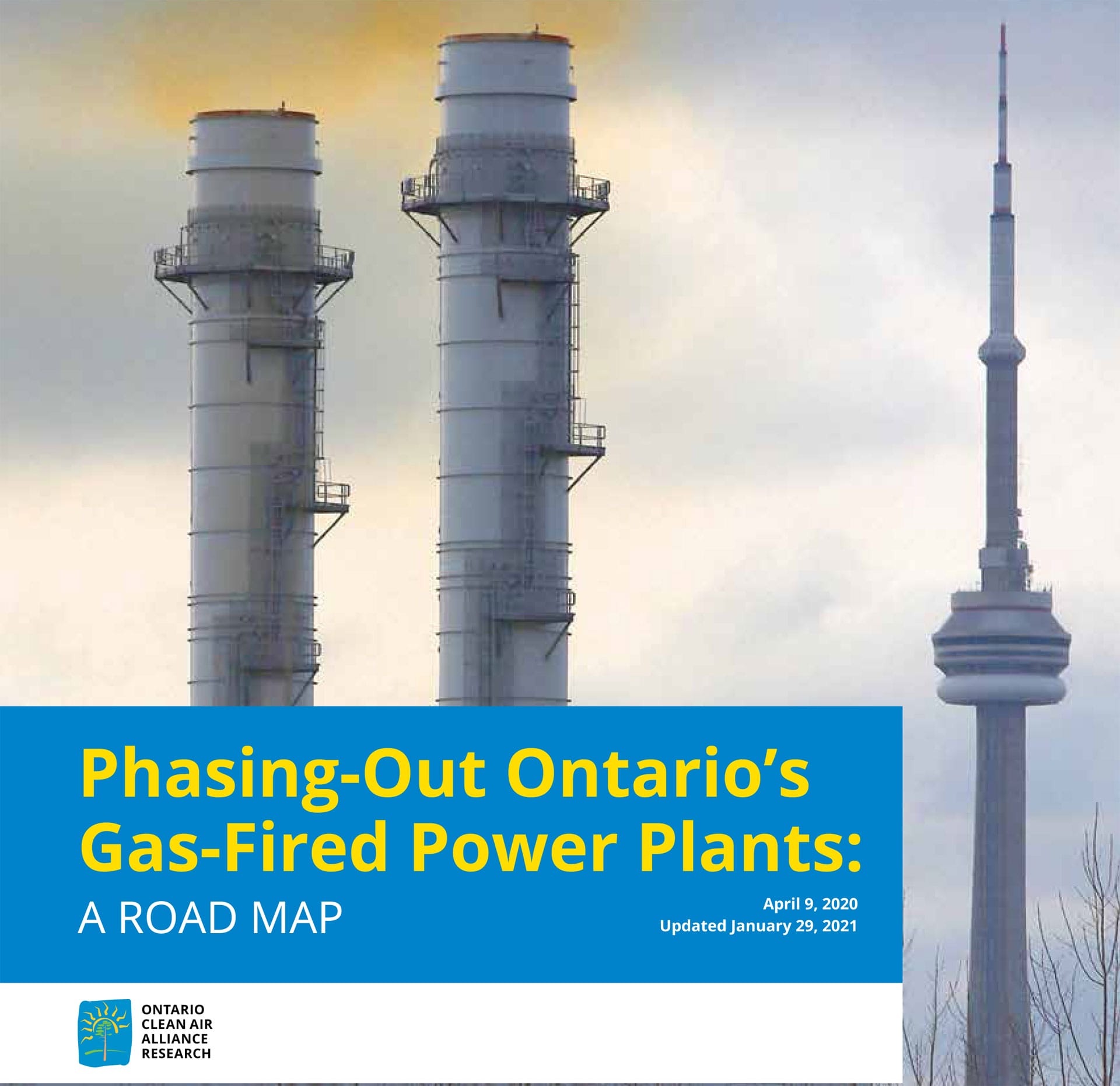
The GHG pollution from Ontario’s gas-fired power plants will increase by more than 300% by 2030 as the province uses gas to replace aging nuclear plants. If this occurs, Ontario will lose roughly 40% of the pollution reduction benefits it achieved by phasing-out its dirty coal plants. We have a better plan for Ontario to keep the lights on while shifting to renewable power and phasing out gas.

The Pickering Nuclear Station takes up 600 acres of prime waterfront real estate in the City of Pickering. When North America’s 3rd oldest nuclear station closes in 2024, this means that there will be an exciting chance for the people of Pickering to revitalize their waterfront – and their community.
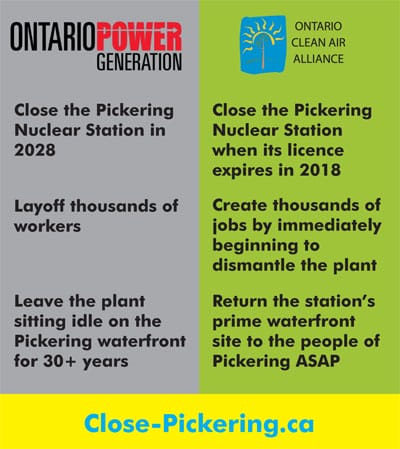
This report lays out the economic benefits of immediately decommissioning the Pickering Nuclear Plant after

Instead of cutting spending on public health, education, environmental protection and energy conservation, the Ontario government can save billions by making a deal with Quebec.
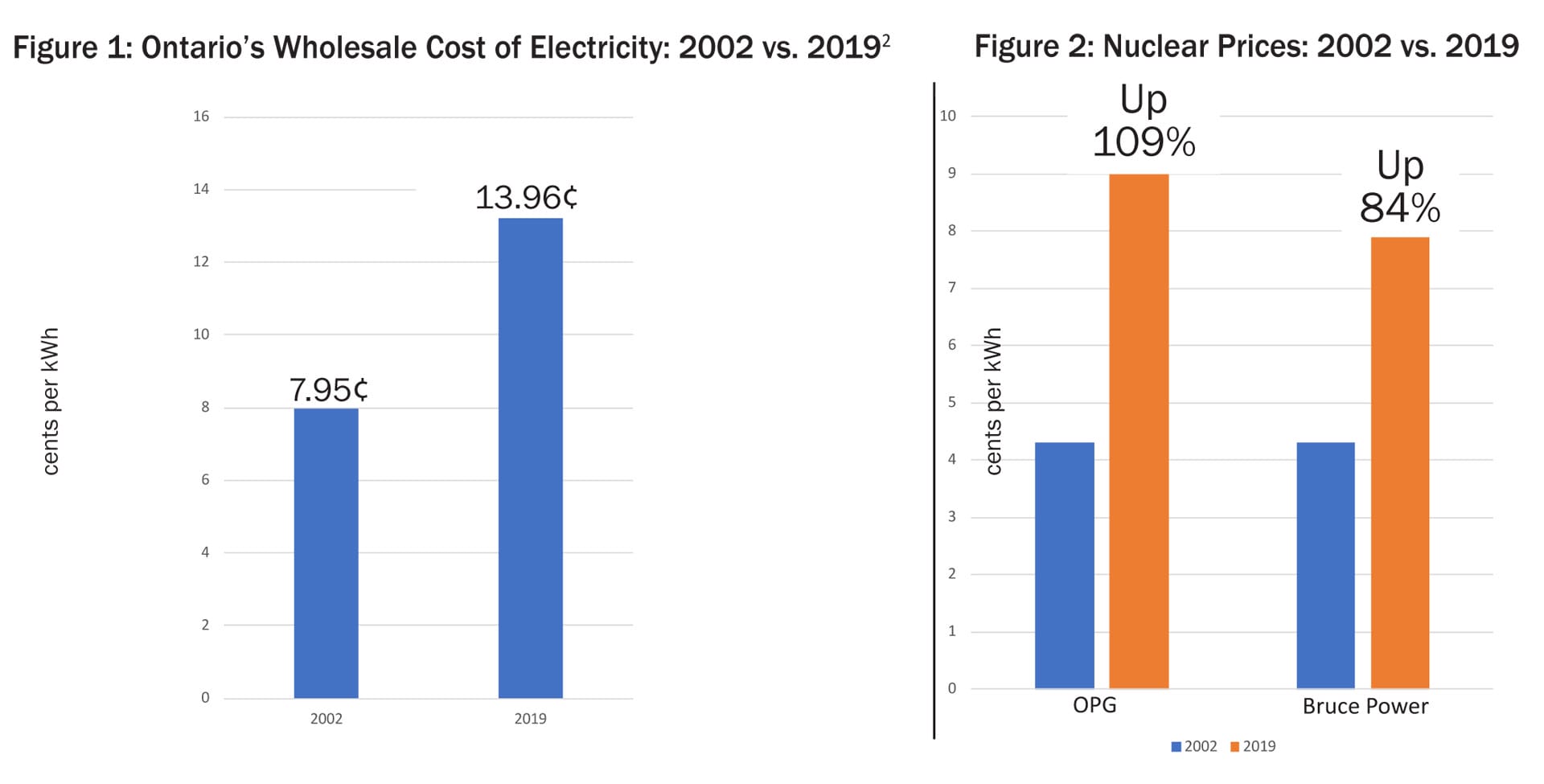
This factsheet looks at how nuclear power has had by far the largest impact on Ontario's rising electricity rates.
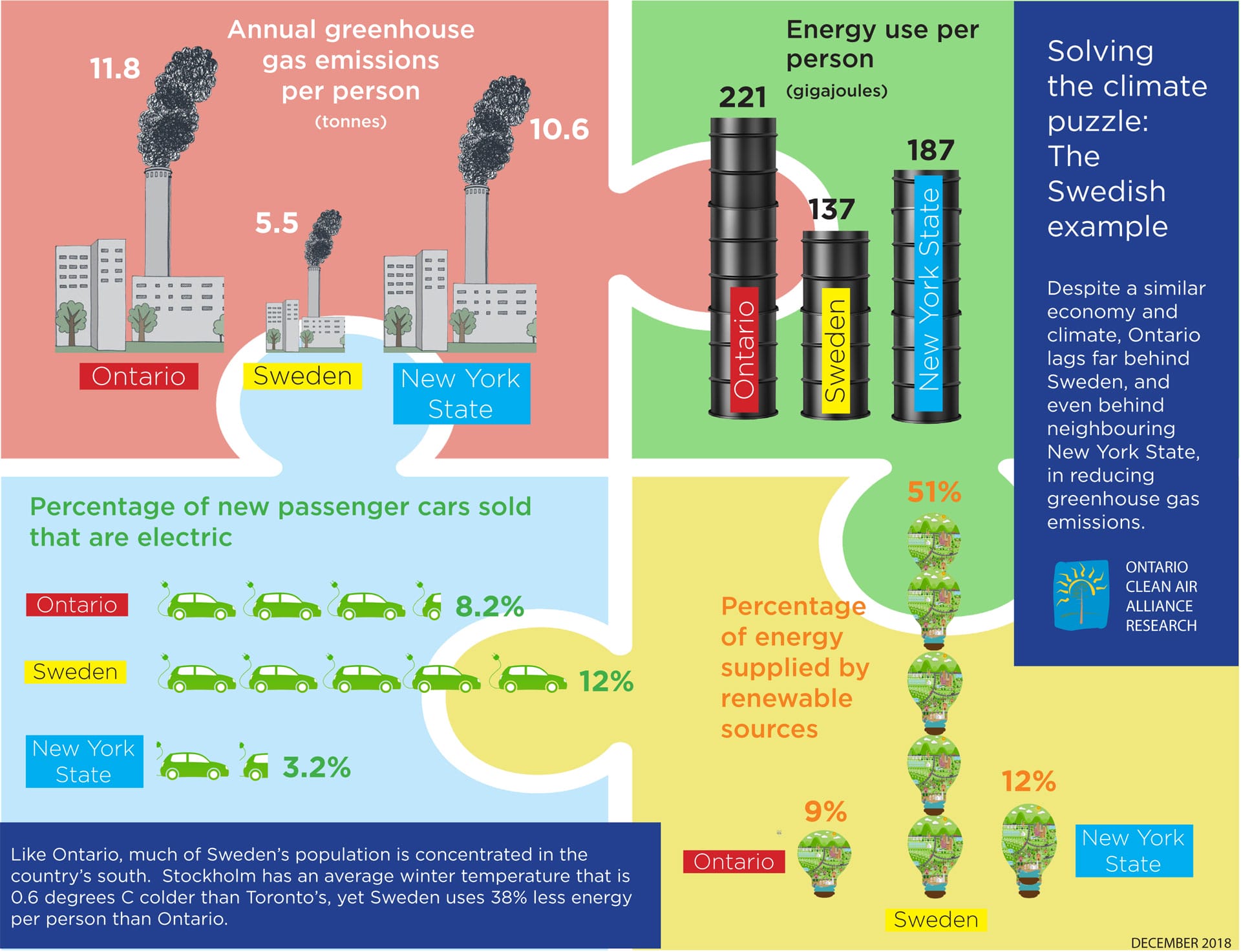
Sweden uses a fraction of the energy of Ontario despite having a similar economy and climate.
Deeper gas efficiency efforts between now and 2030 could save Ontario consumers $85 billion in natural gas costs over the life-times of the energy efficiency measures.

Ontario can lower its electricity costs by $1.1 to $1.4 billion per year by closing the Pickering Nuclear Station and importing cleaner, safer and lower-cost water power from Quebec. The savings would be so great that we could pay every Pickering worker $1 million in severance and we would still save billions!
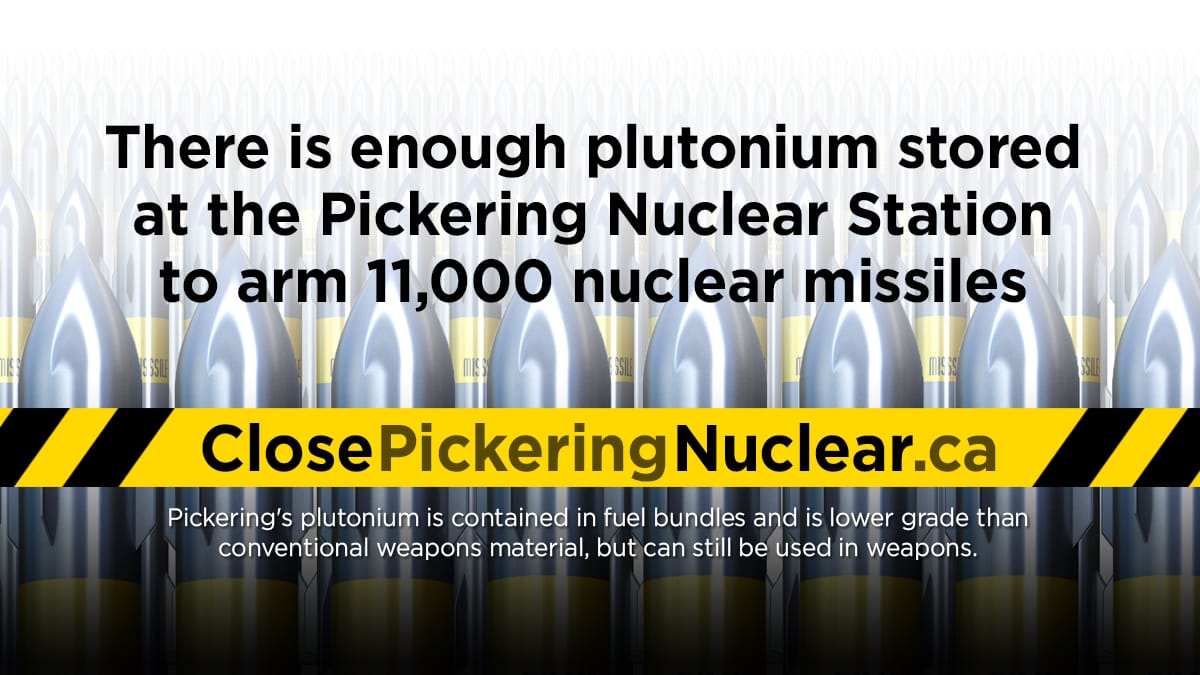
The Pickering Nuclear Station has enough plutonium in waste onsite to arm 11,000 atomic warheads. With no long-term waste solution in sight, it is irresponsible to continue to add radioactive waste to the huge pile already on the waterfront at the station.

This expert report finds that a Fukushima-level disaster at the Pickering Nuclear plant would result in an estimated 26,000 cancer cases, of which roughly half would be fatal. Large areas of the Greater Toronto Area would need to be evacuated and would become uninhabitable in some cases for 100 years or more.
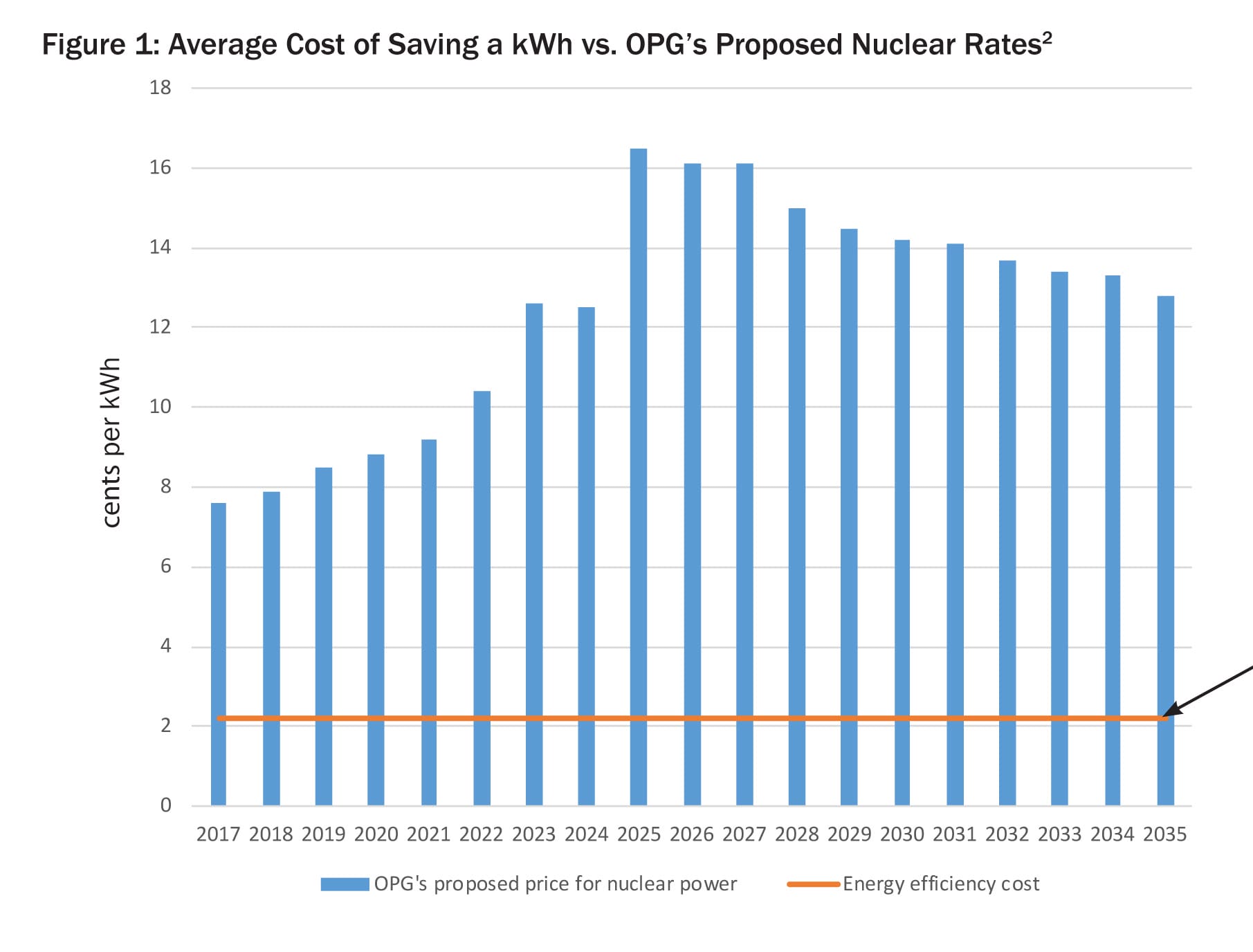
Today, the IESO is paying an average of 2.2 cents for efficiency measures. Meanwhile, OPG is asking to raise the rate it is paid for nuclear power to 16.5 cents. Clearly, maximizing efficiency is a better answer. Our factsheet looks at just how much Ontario could save by maximizing efficiency.

We need to take cost-effective action to reduce electricity sector GHG emissions. This report looks at how to reduce emissions at the lowest possible cost.
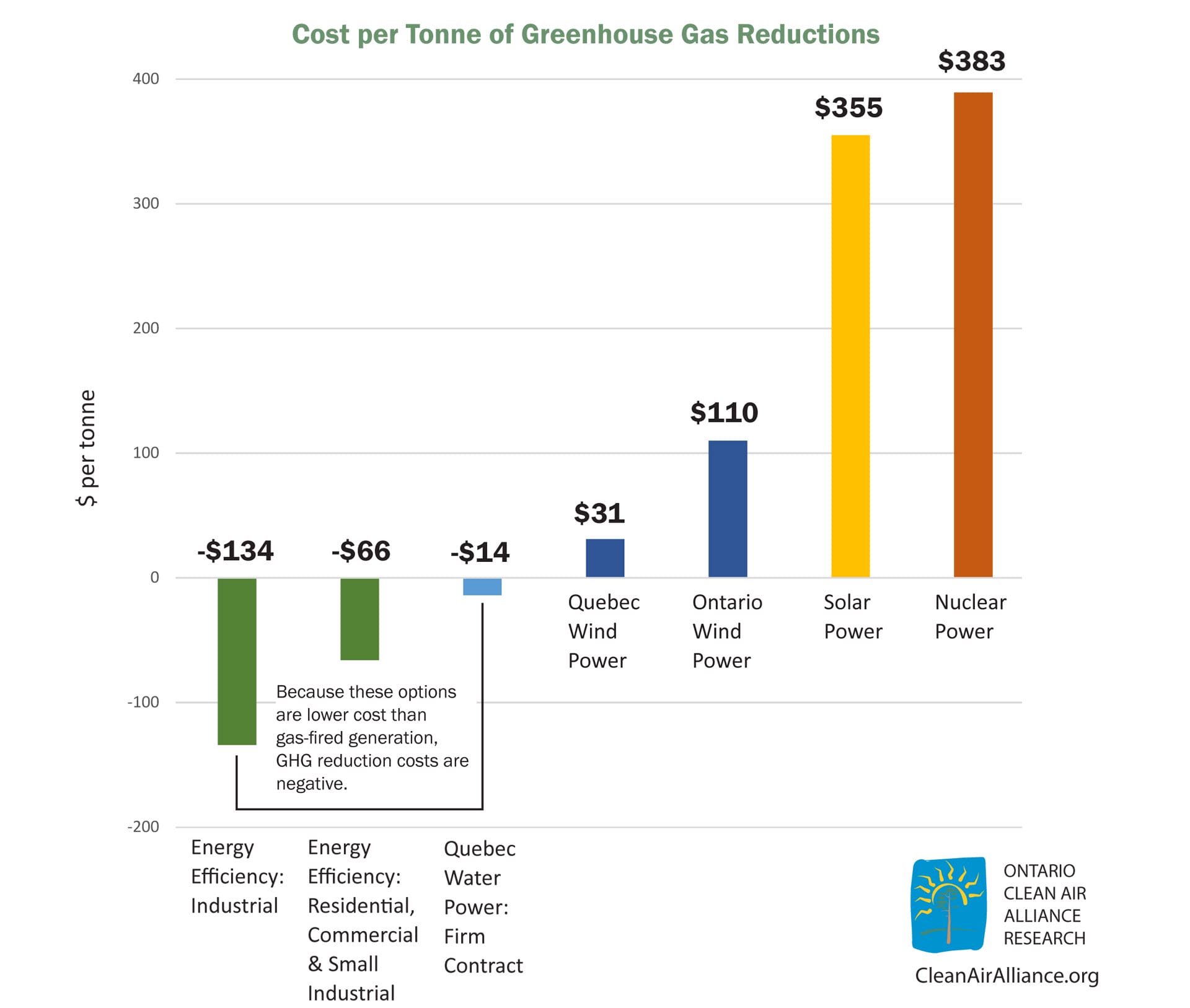
When we compare the cost of various electricity options, we can see which are the most cost-effective for reducing greenhouse gas emissions. Nuclear is our most expensive GHG reduction option,.

Ontario's nuclear plants are the country's largest source of dangerous tritium emissions. This radioactive isotope is produced constantly by CANDU nuclear reactors. Once tritium is inside us, because we breathe it in, absorb it through skin or consume contaminated food or water, it release radioactivity in our bodies.
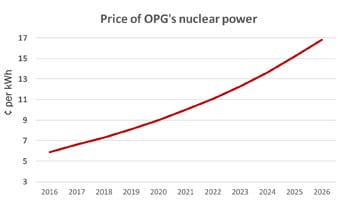
Ontario Power Generation (OPG) is seeking permission from the Ontario Energy Board to increase the price of its nuclear power by 11% per year for each of the next ten years. OPG wants to raise its price for nuclear power from 5.9 cents per kWh in 2016 to 16.8 cents per kWh in 2026. That means the rate in 2026 will be almost triple (2.8 times greater) today’s price. OPG’s proposed price increases are based on the assumption that its $12.8 billion Darlington Re-Build Project will be completed on time and on budget. Of course, every nuclear project in Ontario’s history has been massively over budget.
Ontario has a large electricity surplus, yet Ontario Power Generation wants to continue to run