Maximizing efficiency
Ontario could reduce its electricity demand by 31% by 2035 according to the IESO, reducing the need for fossil fuel and nuclear power generation while allowing clean renewable energy to meet more of our electricity needs.


Ontario could reduce its electricity demand by 31% by 2035 according to the IESO, reducing the need for fossil fuel and nuclear power generation while allowing clean renewable energy to meet more of our electricity needs.

Power Choices: Designing an electricity system for a rapidly changing world looks at how we could redesign our electricity system to lower its climate impact, reduce costs and create new economic opportunities.
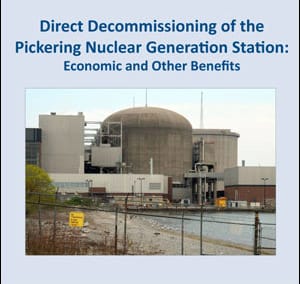
Shutting down the Pickering Nuclear Station in 2018 and proceeding immediately with decommissioning will produce thousands of jobs, save millions of dollars and increase safety for millions of surrounding residents.

The OCAA's review of the Ontario Government's contract with Bruce Power to rebuild up to six reactors finds that the stated cost of the contract is really only a preliminary estimate. What happens when costs inevitably balloon beyond initial estimates (as they have for every nuclear project in Ontario's history) is largely unknown
Thanks to a new Ontario Energy Board (OEB) policy that eliminates usage-based pricing for recovering Hydro One's electricity distribution costs, small rural electricity consumers are about to see a big jump in their monthly electricity bills.
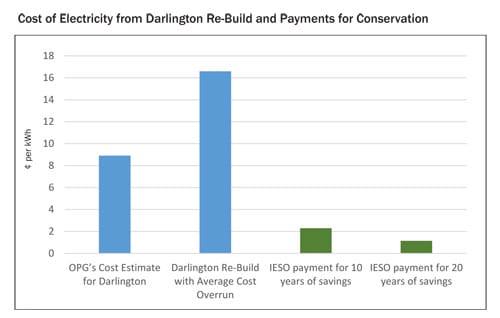
Putting Conservation First Into Practice looks at the mixed signals the government is sending about its Conservation First policy. On the one hand, it says it is committed to securing all efficiency measures that can be obtained at a lower cost than new electricity supplies. On the other hand, it is not paying a fair price for efficiency measures.

Sign our petition calling on Premier Wynne to make a deal with Quebec instead of wasting billions on outdated nuclear

Ontario can introduce carbon pricing while lowering energy bills for citizens and businesses by importing low-cost water power from Quebec.
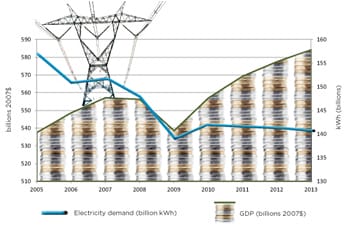
Today, Ontario is producing 21% more goods and services for every kilowatt hour of electricity consumed than it was in 2005.
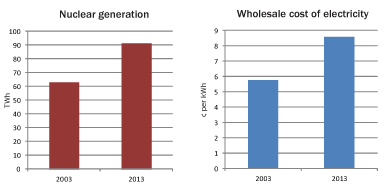
The amount of power supplied by nuclear plants in Ontario has increased by 44% since 2003. Over the same period, the wholesale cost of electricity has also risen by 50% — just more evidence that high cost, high risk nuclear power is no bargain.
No Candu’s operating life has ever been extended beyond its design life. The industry has
This report outlines how an early shut down of dirty coal plants and phasing out the expensive and aging Pickering Nuclear Station, could save Ontario more than a billion dollars on its annual electricity bill.
Breaking the link between economic growth and rising electricity usage This factsheet documents how Ontario

How Ontario can create thousands of new jobs, reduce government deficits and grow its economy by embracing energy efficiency: Our report looks at how five key actions can deliver enormous financial benefits for Ontario while also helping our climate and our environment.

This report looks at Ontario Power Generation's proposal to build four reactors at the Darlington
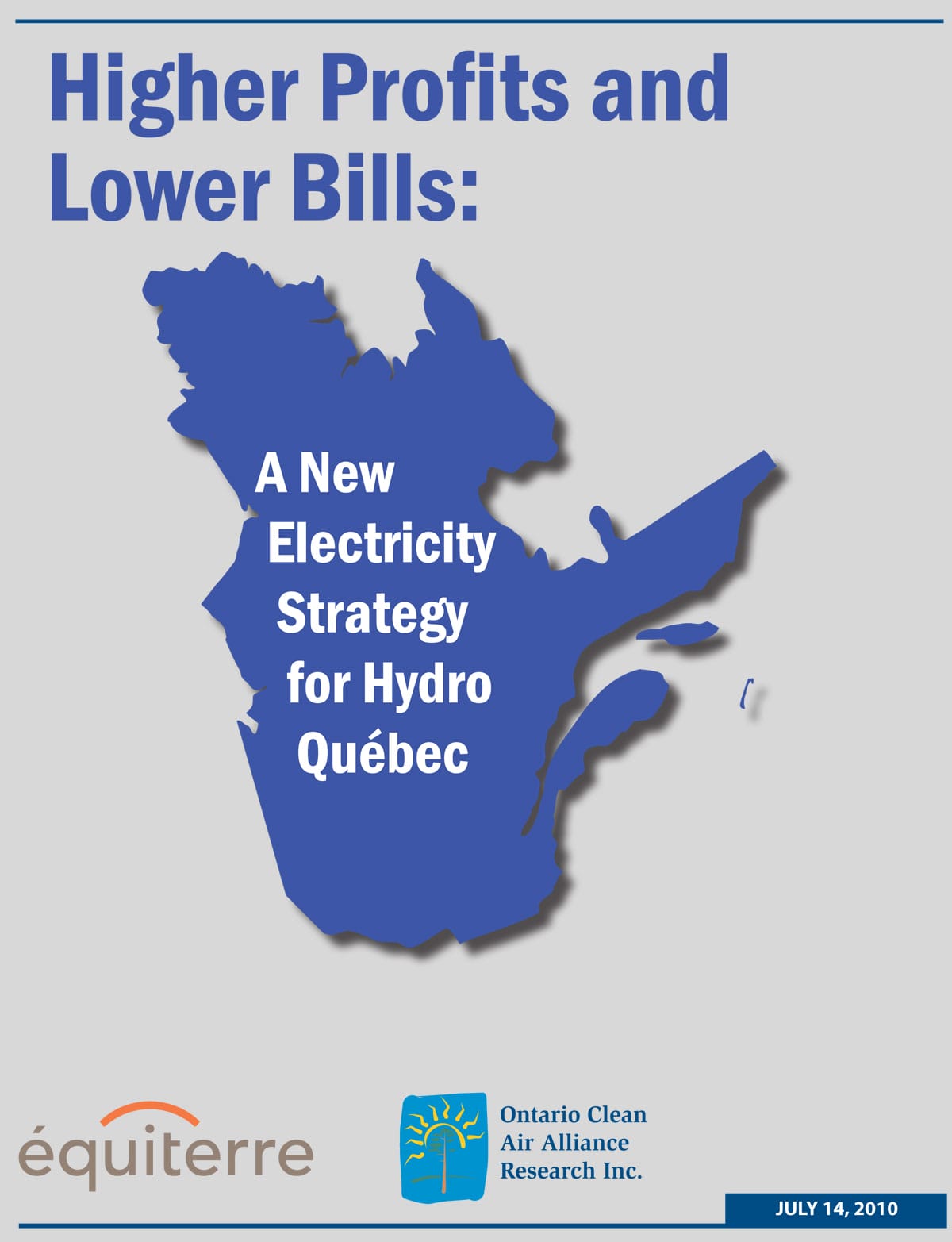
This report outlines how both Ontario and Quebec can benefit from greater electricity cooperation. Read
The Ontario Clean Air Alliance's groundbreaking report looks at how we can decrease the environmental
In 1998, the OCAA hired energy analyst Steven Diener to examine the cost of replacing